-
Why I finally sat down and compared these two approaches
-
Dimension 1: Matching the centrifugal pump curve to the actual duty point
-
Dimension 2: System-level compatibility — pump body, float switch, basin
-
Dimension 3: Compliance documentation and audit trail
-
Dimension 4: Warranty ownership and defect attribution
-
Dimension 5: Hidden cost and delivery risk
-
How to decide: a scenario-based recommendation
Why I finally sat down and compared these two approaches
If you buy pumps the way I did when I first started this job, you probably remember the day it clicked: after weeks of negotiating unit prices, the shipment landed, and the first thing your inspector said was "the float switch thread doesn't match the pump discharge." That's the moment you stop comparing line items and start comparing procurement structures.
I handle quality and brand compliance for a B2B supplier in electrical equipment and building services. Every incoming lot passes my desk before it ships—roughly 700 to 900 SKUs a year, of which pump bodies and pump attachments are about a third. Over the past three years, I've been comparing two sourcing models for the pump categories we carry: one integrated source for the whole basket (in our case, what we usually label an integrated centrifugal pump sourcing arrangement—from centrifugal pumps to basement sump pumps, sewage ejector pumps, float switches, and basins), versus fragmented buying from category-specific suppliers, each competing on unit price.
On paper, fragmented buying looks cheaper. Below is the five-dimension comparison I've actually accumulated between Q1 2023 and Q1 2025. Each dimension ends with a conclusion—not a hedge.
One position up front: my role biases me toward "fewer handoff points, fewer failure types." That does not mean integrated wins every dimension. The second dimension surprised me, and the fifth split even.
Dimension 1: Matching the centrifugal pump curve to the actual duty point
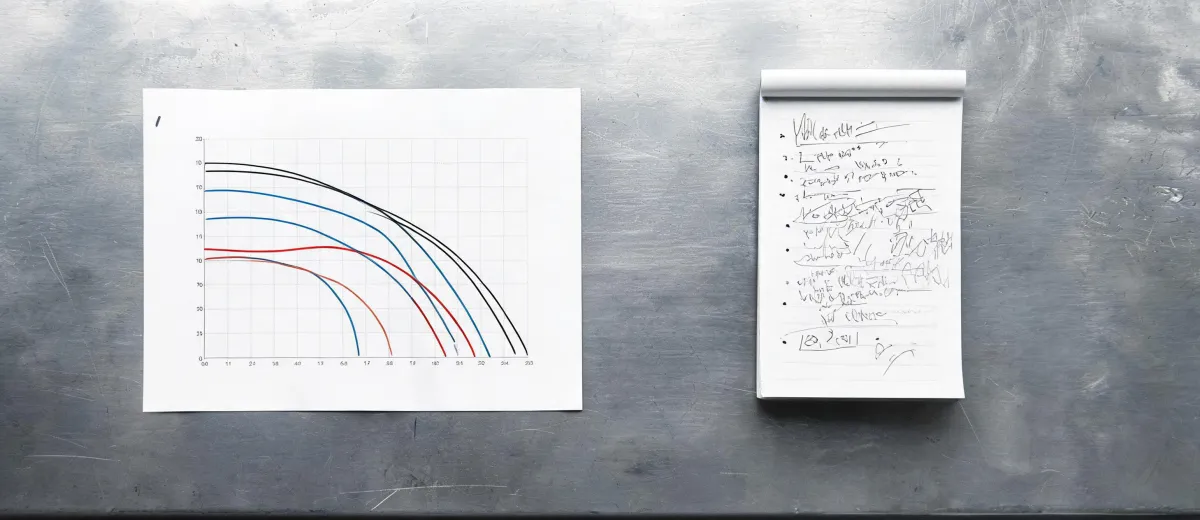
Integrated (A): Integrated suppliers tend to sell centrifugal pumps in coarse horsepower tiers—1/3, 1/2, 3/4 HP. For simple basement drainage or straightforward transfer, that granularity is fine. The problem shows up when your system has a specific head and flow requirement. We once specified a batch of 3/4 HP centrifugal pumps for a small commercial building. The recommended tier showed 55 GPM at 40 ft of head on the catalog curve. Installed, the actual draw was closer to 38 GPM—which sounds minor until you realize the pump was filling a 40-gallon receiving basin connected to two public restroom banks during peak hours. Cycle time stretched by almost two minutes.
Fragmented (B): Specialty suppliers usually calculate to your working point—static head, pipe friction, elbow and valve equivalent length. The proportion of orders with a correctly matched curve is noticeably higher. The trade-off: you or someone on your team needs to read a pump curve, or at minimum know which questions to ask.
Here's something suppliers won't tell you: the "recommended" tier you're quoted is usually the one the supplier has the most stock of, not the one that matches your curve most precisely.
Conclusion: For basement sump pump applications where flow variability is not critical, A's coarse tiers are good enough. For boosted transfer where a specific discharge is required, B wins on this dimension alone.
Dimension 2: System-level compatibility — pump body, float switch, basin
This is the dimension where my initial assumption flipped. I assumed fragmented buying would be more flexible because three specialists offer more options. In practice, the failures were all about interfaces.
In Q2 2023 we took a 42-unit basement sump pump package for a parking garage retrofit. The customer wanted cost control, so we sourced fragmented: pump body from one supplier, basin from another, sump pump float switch from a third. At first-article inspection, the float switch thread spec (1/2" NPT) did not match the pump-side tap (3/8" PF), and the basin discharge port ran 90 degrees off from the pump outlet. None of that was a quality defect at any single supplier. It was an interface that nobody owned. Thirty-one of 42 units needed rework or adapters; the schedule slipped 11 days. Rework plus expedited replacement ran approximately $3,200—actually, closer to $3,800 once you count the expedited shipping.
After that project I built an interface checklist into every pump PO: pump discharge size and thread standard, basin inlet/outlet orientation, float-switch differential and mounting style, and float travel range. Integrated suppliers usually resolve these internally because they're selling you a system. Under fragmented sourcing, if you don't define the interface, nobody is obligated to catch it.
The "fragmented is always more flexible" thinking comes from an era when integrated pump suppliers only stocked one or two pump families. Today, most integrated sourcing operations carry enough SKU depth that the flexibility gap has narrowed considerably—at least across the categories we handle.
Conclusion: Fragmented buying is more flexible on paper and less forgiving in practice. This is where prevention is cheapest: an interface checklist costs minutes; the rework costs real money.
Dimension 3: Compliance documentation and audit trail
Integrated (A): This is where single-source stability shows. For sewage pumps and sewage ejector pumps especially, our B2B customers ask for UL or CSA listings, motor insulation class, IP/NEMA enclosure rating, and material compliance declarations. (NSF/ANSI 61 comes up for potable scenarios.) Getting a full document set from one source is slower than it looks—but it arrives as a complete pack.
Fragmented (B): Document chains break frequently. The common pattern: the pump body paperwork arrives complete, but the motor or float switch declarations have to be requested separately and take weeks. Solid-handling claims on sewage ejector pumps—2" solids passage, for example—are especially prone to being stated in marketing copy but missing from formal documentation.
According to the U.S. Department of Energy's commercial and industrial pump standards (10 CFR 431), certain centrifugal pump categories require specific test and labeling documentation. In a Q3 2023 supplier audit, one fragmented supplier's nameplate data didn't reconcile with the DOE efficiency data we required—we rejected 60 pumps. Since then, every pump PO carries a motor data sheet and efficiency declaration requirement.
Conclusion: A leads clearly. If your project has to survive bid review or third-party audit, integrated saves the back-and-forth time.
Dimension 4: Warranty ownership and defect attribution
This is the dimension that quietly matters most, and it only shows up when something fails.
Integrated (A): One contact. When an installed sump pump for basement duty started short-cycling, the question of whether the failure originated in the pump, the float switch, or the basin installation was resolved inside the supplier before it came back to us. In Q1 2024, seven float switches failed early (contact welding after short cycles). We had replacements processed and a root-cause note back within two weeks.
Fragmented (B): Fragmented returns tend to devolve into "that's not our part." The pump supplier says the float differential was set wrong and caused short cycling; the float supplier says the pump's startup current exceeded the contact rating. You—the party in the middle—have to design the comparison test, produce data, and send it back to both. That episode took over a month to attribute. For a continuously running sewage pump duty, that month is real downtime.
Conclusion: A wins. But this is exactly the dimension where the fifth one (below) offsets the cost.
Dimension 5: Hidden cost and delivery risk
A's hidden costs concentrate in SKU depth and price flexibility—integrated suppliers rarely over-stock a single model for you, and lead times run 4–6 weeks. B's hidden costs concentrate in management overhead: stacked shipping, arrival mismatches, more inspection batches, and after-sales coordination time.
I don't have hard data on how much cheaper one model is industry-wide. What I can say from our own order structure is that each fragmented PO consumed an average of about 1.2 hours of extra processing (reconciliation, expediting, interface clarification). Across hundreds of orders a year, that's a number worth converting to cost. Take that with a grain of salt—it's our structure, not a benchmark.
Pricing note: price ranges referenced in this article are based on publicly listed distributor quotes between Q1 2025 and Q4 2025. Pump prices vary by spec, quantity, and lead time—verify current rates before ordering.
Conclusion: A trades some price flexibility for lower management overhead. B trades lower unit cost for higher coordination cost. Neither wins outright.
How to decide: a scenario-based recommendation
- Standardized basement drainage (sump pump for basement), simple basins, replacement orders: Integrated sourcing is almost always easier to run, and the curve-matching gap rarely bites.
- Specific head requirements, boosted transfer, or sewage ejector pump projects with solids-handling, discharge orientation, and periodic inspection requirements: Fragmented specialty buying gives better curve matching and depth—but only if your PO template can define the interfaces up front.
- Mixed-category orders that also need compliance documents once and correctly: Integrated. Fragmented sourcing slows bids at the document step.
- If you do not have someone who reads pump curves, and you do not have first-article inspection: Fix the process before going fragmented. Otherwise fragmentation amplifies your defect rate.
Regardless of which model you pick, I would lock in five things: an interface checklist (pump outlet, float switch thread and differential, basin port orientation), motor data sheets with nameplate info, efficiency declarations, first-article photo records, and a warranty attribution template that ships with every order. In my opinion, these process items decide whether a B2B pump procurement program lands cleanly far more reliably than brand choice or unit price.
That said, this reflects our own order structure between 2022 and 2025. Different industries, regions, and supplier networks will weight these dimensions differently. Use the five dimensions as a checklist, not as a verdict.